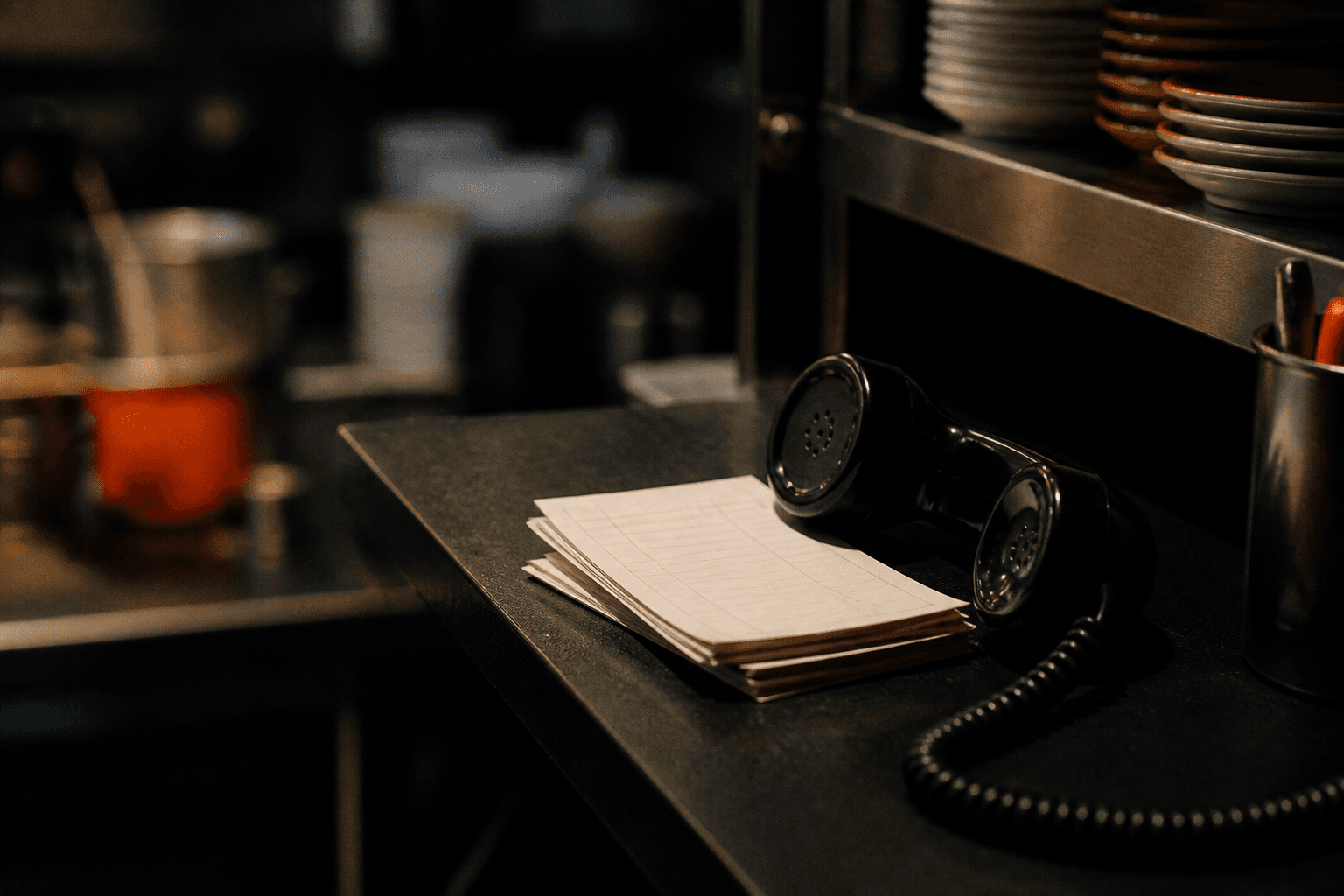
A busy restaurant phone line becomes a sales problem during the moments staff can least afford another task. The cashier is taking payment, the kitchen is calling for a missing modifier, and a customer is waiting at the door. A phone can ring through all of that and leave no useful record behind.
The practical fix is to give each call a dependable next step. Answer the common questions, collect the order details in a set sequence, read the order back, and send anything that needs judgment to a person. That keeps a dinner rush from depending on whether one employee happens to hear the phone.
Why restaurant phone orders get lost
Most missed orders come from a small set of predictable moments:
- The phone rings while the only available employee is serving a table.
- A customer calls to ask about delivery, allergens, or today's availability before placing an order.
- A repeat customer has to explain their preferences again, making the call slower than it needs to be.
- An unusual request arrives during the busiest fifteen minutes of the shift.
These are workflow gaps, not simply staffing gaps. A better phone process removes the small decisions that slow a shift down while keeping the customer's order clear enough for the kitchen and staff to review.
What a better restaurant phone-order flow looks like
- Identify the reason for the call. Separate a new order from a menu question, an order-status request, and a request for staff.
- Collect the next useful detail. Ask for the item and its options first, then pickup or delivery details and a callback number.
- Confirm before sending it on. Read back the items, modifiers, address, and timing. This is where a missing side or wrong apartment number is caught.
- Hand off the exceptions. Allergies, catering orders, complaints, and delivery addresses outside the usual area need a clear person responsible for the next step.
Use returning-customer context to make the next call easier
If the customer has ordered before, the phone number can provide useful context. It might surface a familiar delivery address or a previous preference, but it should not silently repeat the last order. A customer calling on Friday night may be ordering for a different group, a different address, or a different budget.
Ask for confirmation before using the saved detail. Context should remove repetition, not remove the customer's control over the order.
Restaurant phone-order checklist
- List the ten questions staff answer most often between lunch and dinner.
- Write the exact menu, hours, delivery, and allergen rules used in those answers.
- Mark the requests that need a manager, kitchen lead, or delivery check.
- Make the read-back and confirmation step explicit for every order.
- Review missed calls, incomplete orders, and handoffs with the team each week.
The goal is not to make the restaurant sound like a call center. It is to give a customer a clear path when the team is busy doing the work of running the restaurant.
See it in practice
Give the next customer a clear path.
See how CrosChat handles the first response and hands the exceptions to your team.
See the restaurant workflow